
Data engineering & integration · Data quality & reconciliation
02 AI & Machine LearningApplied machine learning · Generative AI
03 Software & Product EngineeringCustom application development · Legacy modernization
04 Cloud & CybersecurityCloud migration & modernization · Cloud operations & support
05 Acquisition & Financial ManagementAnalysis of Alternatives · Market research & COTS/NDI evaluation
06 Program & Project ManagementProgram management & PMO support · Process improvement
Reconcile the record · instrument the definitions · ship the smallest thing that runs · close the loop.
Readiness, sustainment, acquisition and program financial systems.
IntelligenceSecure analytics, transcription and technical talent for missions.
Federal CivilianEnterprise cloud, case workflows and public financial accountability.
State, Local & TribalFederal-grade accountability on a state or municipal budget.
HealthReliability, forecasting and workforce analytics for clinical operations.
Commercial & Small BusinessFor organizations that must defend an AI-assisted decision.



Where a customer can't be named, the component and scale are characterized instead.
ALL WORKGAO, CBO and IG findings, read closely and written up plainly.
ALL INSIGHTSEngineering, data science, and Ghost Works.
OPEN ROLES INTERNSHIPSHands-on projects and practical challenges, including our Drone Development internship.
EXPLORE INTERNSHIPS →Capability that stays after we leave.
AI education and workforce development built around how people actually make decisions and do their jobs, plus the toolkits and assessments an organization can use on its own.
A system nobody knows how to operate is a system that quietly stops being used. This is the capability that makes the rest of our work hold: leaders who can judge an AI claim, teams who can apply it under deadline, and an organization that keeps improving after the engagement ends.
AI for Impact programs
Four pathways that differ by audience, depth and context: AI for Executives for the people signing the decisions, AI for Practitioners for professionals using AI daily, AI for Everyone for organization-wide fluency, and the Applied AI Foundry for a specific profession or mission environment. Built and taught with James Madison University’s School of Professional & Continuing Education.
Every pathway runs the same progression at its own depth: understand what the technology does and does not do, practice against the participant’s own material, apply it to a real workflow with verification as an explicit step, and settle what has to change in governance for the gain to survive. Education that stops at explanation produces enthusiasm and no change in output.
Each pathway states its own audience, format and delivery. EXEC is a three-day intensive at JMU’s Washington Center; PRACTICE and EVERYONE scale from a single team to a whole department; FOUNDRY programs are built per domain and can be run as a private cohort.
Sessions run against your own material rather than a vendor sandbox, and participants keep the working materials. That is the difference between a course people attended and a capability the organization still has six months later.
Applied AI Foundry
Specialized programs that translate AI into the language, workflows, challenges and responsibilities of a specific industry, profession, role, mission environment or functional discipline. A Foundry program is built around the work rather than around the technology, which is why it is not organized as a list of sectors.
Current programs cover Health (AI for Nurses across six clinical tracks, and AI for Healthcare Leaders) and Defense & National Security, with AI for Military Leadership and AI for Military Operations. The structure is designed so a new domain is a new program rather than a new curriculum, and additional programs are in development.
AI for Nurses runs six clinical tracks (foundations, clinical workflow and documentation, patient communication, operations, privacy and safety, and nurse leadership), taken in sequence or selected for a single unit.
On the defense side, AI for Military Leadership addresses decisions, readiness and governance, while AI for Military Operations covers planning, analysis, information processing and the division of work between an operator and a model. Programs tailor across Air Force, USMC, Army, SOCOM and Space Force.
Find Your AI Starting Point.
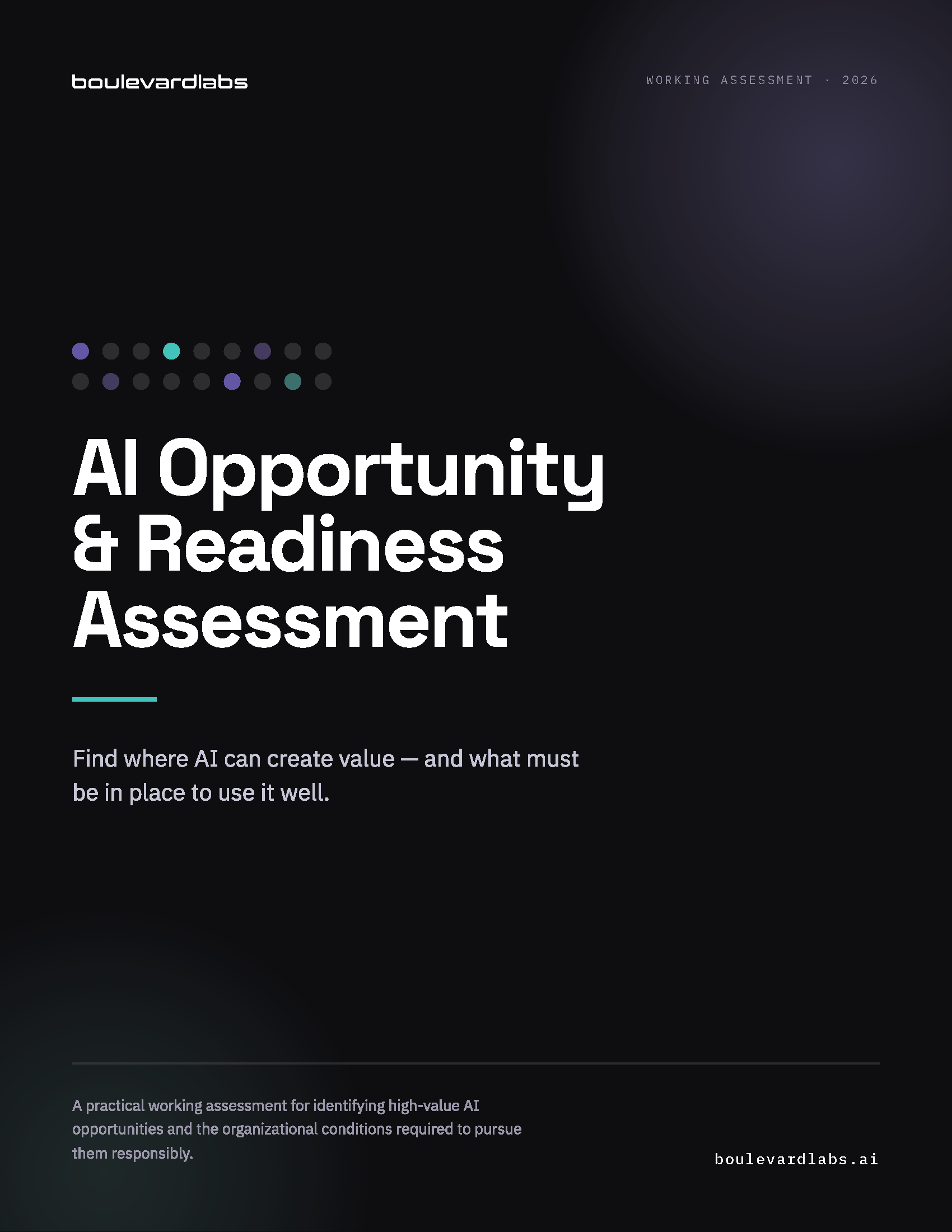
Not sure where AI fits into your organization? Discover potential opportunities, evaluate your readiness, and identify what it takes to move forward responsibly.
Our guided assessment helps organizations explore where AI could create value, understand important readiness considerations, and identify practical starting points for adoption.
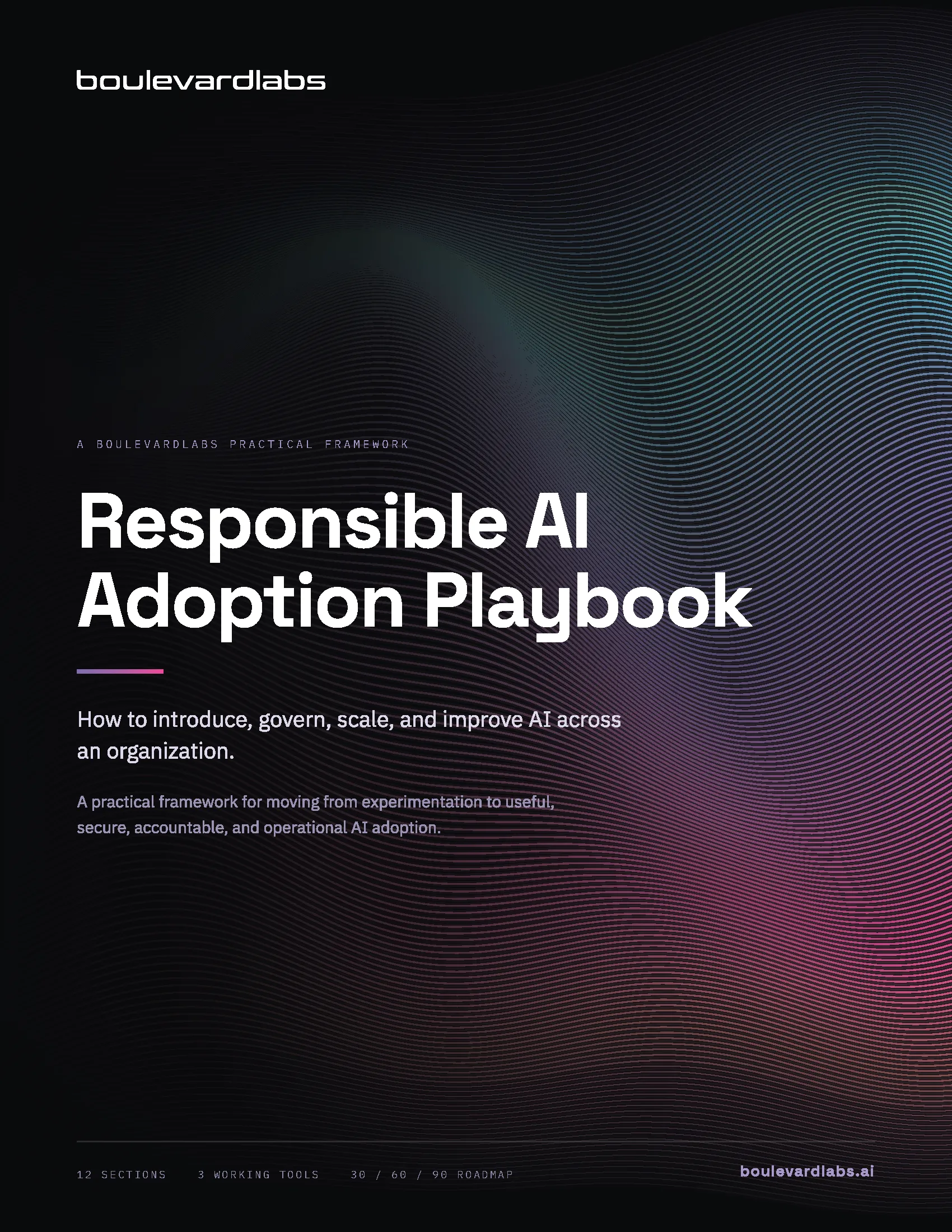
The AI Strategy & Adoption Toolkit covers the organizational questions that precede any rollout: where AI creates value, what governance has to exist first, and how to tell a working capability from a demonstration. The Healthcare AI Toolkit adds clinical-specific guides, assessments and playbooks.
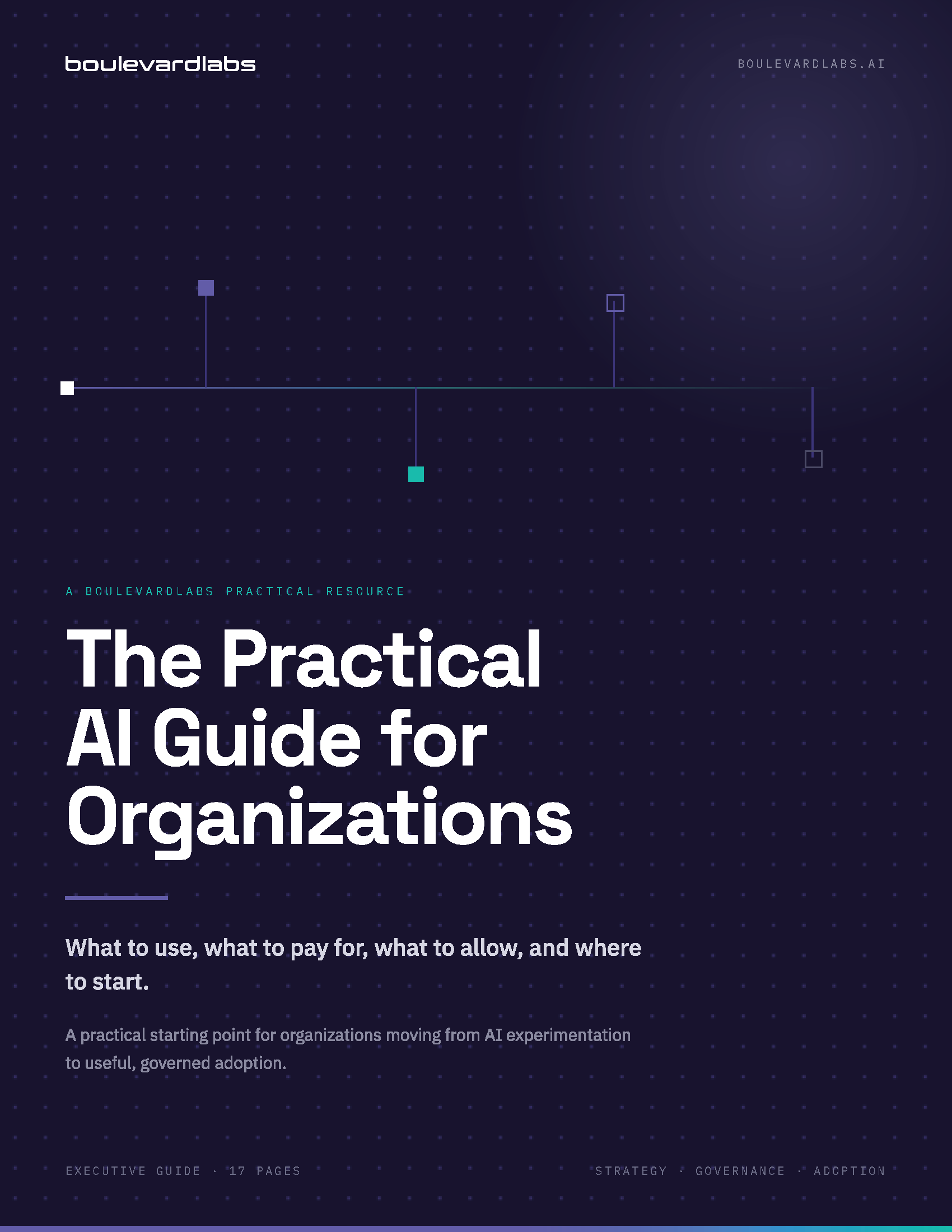
The three downloads work as a sequence rather than a library: understand what AI can do, assess where your organization actually stands, then adopt with governance in place before committing budget.
Tell us what you want your team to be able to do.
